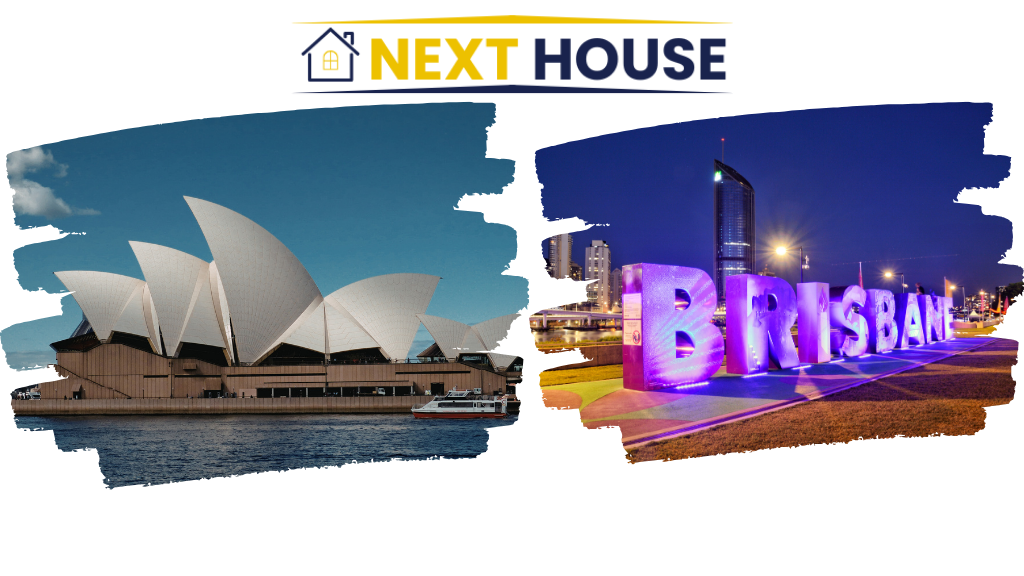
The Australian property market this year is now being increasingly debated. Is Sydney the safer long-term investment, or is Brisbane quietly becoming the smarter choice for 2026 and beyond?
The two cities are good in their fundamentals and have thriving populations, as well as significant infrastructure revolutions that are still underway. However, it is not that simple when it comes to the issue of the return on investment (ROI). We should dissect it city by city to understand the performance of each market in 2026.
Sydney: The Australian Powerhouse Market – but at a Cost
Sydney has always been known as the heavyweight of Australian real estate. It is the financial centre, the cultural hot spot and the place where demand does not appear to die away. However, coming into the year 2026, what is it that Sydney can offer investors?
1. High Growth in Long-Term Capital
The shortage of supply in Sydney remains. Nevertheless, the number of homes cannot possibly combine with the population growth, despite the new developments that have been made. This imbalance has traditionally driven the prices of Sydney upwards – and the trend seems to be ongoing.
Analysts anticipate gradual to average growth till 2026, particularly in high-demand inner suburbs and coastal enclaves where land is scarce.
2. Higher Entry Costs
The thing is, here there is the catch: Sydney is quite costly.
To a great number of investors, the challenge of entering the Sydney market is bigger than the challenge of growing the city.
The median house prices are highly above the million-dollar mark, and, therefore, investors require higher deposits, buffers, and borrowing capacity.
3. Rental Market Strength
The Sydney rental market is one of the tightest. The rates of vacancies are extremely low, and the number of students, migrants, and young professionals who require hiring is growing.
The result?
- Higher weekly rents
- Stable tenancy demand
- The rental returns are increasing at a competitive level.
Nevertheless, the yields are usually low compared to the other cities, e.g., Brisbane, due to the high purchase prices in Sydney.
4. Who Should Invest in Sydney?
Sydney suits their investors who desire:
- long-term capital appreciation
- low vacancy risk
- expensive, prestigious locations of high demand.
However, to those investors who value yield and affordability, the ROI in Sydney might be slower or more difficult to realise.
Brisbane: The Emerging Powerhouse With a Good 2026 Upswing
Brisbane is the upstart that knows it has the potential of being the centre of attention in 2026. The city has experienced a swift growth over the last two years, which is due to the shift in population, lifestyle demand and massive investments.
1. Reduced entry cost, increased ROI potential
Brisbane has a much less expensive entry point than Sydney – that is, investors can afford purchaseable suburbs in the city at much less than the cost of Sydney.
This low cost introduces the possibility of:
- first-time investors
- portfolio diversification
- long-term value growth
Purchase prices are lower, which means that rental yields are better, which provides Brisbane with a definite ROI advantage in the short-term and medium-term perspectives.
2. Strong Population Growth
The quality of life, warm climate, and less hectic lifestyle have also continued to attract interstate migrants to Brisbane, especially from NSW and Victoria.
Population growth fuels:
- housing demand
- rental competition
- capital appreciation
This is a trend that is not likely to change soon.
3. Infrastructure Boom Before the Olympics
There are some significant transformations in the city in the form of new transport links, refurbishment of the precincts and revitalisation of tourism. A price increase is traditionally linked with the growth in investment in infrastructure, and Brisbane is witnessing one of the biggest infrastructure booms in decades.
Investors might benefit by:
- Capital growth uplifts
- the gentrification of neighbouring suburbs.
- Increased rental demand
4. Rental Market Outlook
The vacancy rates of the rental properties in Brisbane are also very low in the country. Demand and supply have been extremely high, and rents have soared, and there is no indication that they are going to go down by 2026.
This makes Brisbane very yield-performing, taking the lead in many instances over Sydney.
Side-by-Side Comparison: Sydney vs Brisbane ROI in 2026
| Factor | Sydney | Brisbane |
| Entry Price | Very high | Moderate/lower |
| Capital Growth | Strong long-term | Strong short-to-mid-term |
| Rental Yields | Moderate | Higher |
| Vacancy Rates | Very low | Extremely low |
| Market Volatility | Stable, less flexible | Growing, fast-changing |
| Infrastructure Impact | Ongoing but slower | Significant, Olympics-driven |
| Best for | Long-term wealth | Strong ROI + affordability |
So… which city will have the better ROI in 2026?
In the pure ROI, which is a ratio of the rental returns, capital gains and affordability, Brisbane wins again in 2026.
- Lower purchase prices
- Higher yields
- Rapid population growth
- Significant infrastructure increases demand.
All these are particularly why Brisbane is attractive to the investor who wants high performance without the high financial burden.
Nonetheless, Sydney would continue to be the best in long-term appreciation and close-to-zero vacancy risk. Sydney might continue to appeal to those investors who have larger budgets and long durations of investing due to the stability and prestige aspects.
Final Thoughts
Both Brisbane and Sydney have strong arguments as to why to invest in 2026; however, which city is the best place to do this relies on your approach.
- Need better returns and quicker ROI? Brisbane wins.
- Need long-term capital gain and an established market? Sydney remains unmatched.
The positive thing is that the two cities will perform well since Australia is on a new stage of growth, migration, and urban development.
And in case you have some more investment to make, 2026 could be the best time to check your budget, strategy and long-term goals and decide which city fits them best.